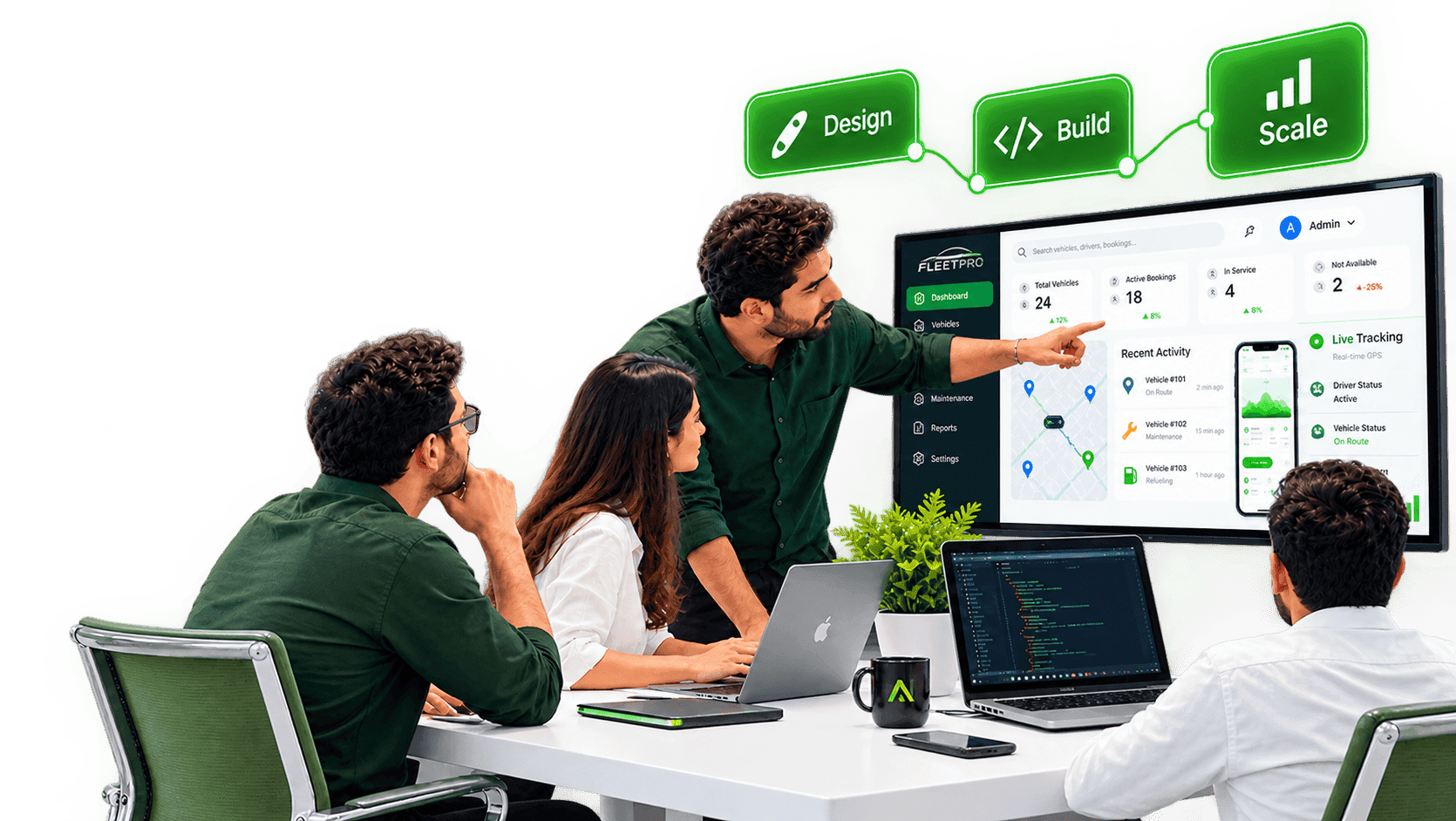
From Idea to MVP: A Practical Product Development Process
- Product Development
- MVP Development
- UI UX Design
- Digital Products
See how businesses can turn a product idea into a working MVP with a focused development process.
From Idea to MVP: A Practical Product Development Process
Building a digital product often starts with a simple idea. The difficult part is turning that idea into something people can actually use.
Instead of trying to build every possible feature at once, businesses can start with an MVP (Minimum Viable Product). An MVP focuses on the most important features needed to test an idea, understand users and create a foundation for future development.
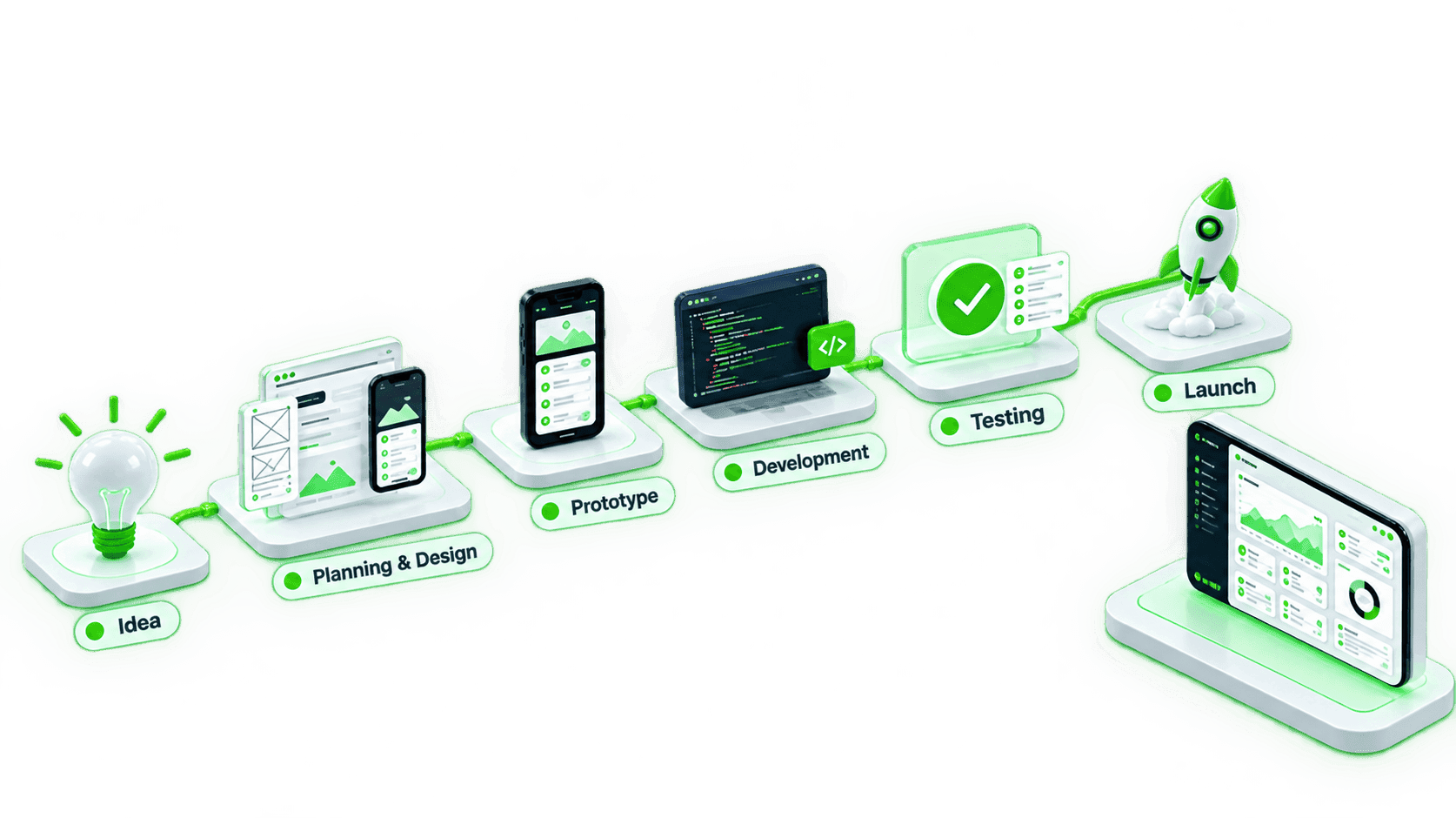
1. Start With the Problem
Before thinking about features or technology, first understand the problem the product needs to solve.
Ask simple questions:
Who will use the product?
- Who will use the product?
- What problem are they facing?
- How will the product make their work easier?
- What result should the product deliver?
A clear understanding of the problem helps prevent unnecessary features from being added too early.
2. Define the Core Features
A new product does not need every feature in its first version.
The goal of an MVP is to identify the features that are essential for users to complete the main task.
For example, a business platform might initially need user accounts, a dashboard, basic management tools and reporting. More advanced features can be introduced later based on actual requirements and feedback.
3. Plan the User Experience
A product should not only work—it should also be easy to understand.
UI/UX planning helps define how users move through the product, where important information appears and how key actions are completed.
Wireframes and user flows can help organise these ideas before development starts.
4. Build the First Version
Once the requirements and design are clear, development can begin.
The first version should focus on creating a stable and usable product rather than adding unnecessary complexity.
Building in stages also makes it easier to review progress, test features and make improvements during development.
5. Test Before Launch
Testing helps identify problems before users experience them.
The team should check important areas such as functionality, usability, performance and how the product behaves across different devices or environments.
Issues found during testing can then be fixed before the product goes live.
6. Learn and Improve After Launch
Launching an MVP is not the end of product development.
Real users can provide useful information about what works, what causes difficulty and which features would provide the most value next.
These insights can guide future updates and help the product develop based on real needs rather than assumptions.
Build With Room to Grow
A successful digital product does not have to start with dozens of features.
Starting with a focused MVP allows businesses to validate an idea, learn from users and make better decisions about future development.
At TECHNAZ, we bring product strategy, UI/UX and development together to help businesses turn ideas into practical digital products that can evolve as their requirements grow.
Want to discuss your next project?
Talk to Technaz about managed IT, custom software, or product delivery.